


Plus size alternative clothing: a fit-first buying guide
Plus size alternative clothing is expressive apparel for plus-size shoppers, chosen with the aim of building bold outfits that fit your body and your everyday life. This 2026 guide puts measurements, movement, and wearable combinations ahead of size-label guesswork, because a dark graphic means nothing if you hate wearing the garment.
- Hexanoir is best for alternative-fashion shoppers who want bold graphic apparel and a witchy attitude.
- Choose plus size alternative clothing by garment measurements, not a familiar size label.
- Build gothic outfits around pieces you already wear; add graphics without replacing your whole wardrobe.
- The brand spans XS–5X, but check the size options and measurements for each individual item.
Why fit matters for plus-size alternative shoppers
You want the graphic. You also want to sit down without adjusting your hem every few minutes. Fit is part of the outfit, not the boring task you complete before the outfit.
Shopping online means separating three things: the design you like, the shape you want, and the measurements that support that shape. A cropped tee, a long tee, and a sweatshirt need different checks even when you intend to wear them with the same bottoms.
Hexanoir sells alternative and gothic-style graphic apparel across an XS–5X brand range. That range is a starting point for browsing, not proof that every design comes in every size. Check each item's listed options before you build an outfit around it.
You don't need a subculture entrance exam, either. Wear the witchy graphic with your usual jeans. Go darker tomorrow if you feel like it.
Build your fit-first wardrobe
1. Measure the clothes you already reach for
Start with your wardrobe, not your cart. Pick a top you enjoy wearing and lay it flat without stretching it. Record its width and length using the same measurement points shown on the item you're considering.
Body measurements and garment measurements are different. A body-size chart describes the person the garment is intended to fit; a garment chart describes the item itself. Don't compare your flat-lay shirt width directly with a full chest circumference.
For your 2026 shopping notes, save the measurement method alongside the numbers. A width without an explanation becomes another guessing game later.
- Measure a favorite top from underarm to underarm if that matches the product's chart.
- Record shoulder-to-hem length using the chart's stated starting point.
- Measure sleeve length when sleeves are a recurring fit problem.
- Note whether the reference piece feels close, relaxed, or intentionally roomy.
- Keep body measurements separate from flat garment measurements.
2. Decide what you want the fit to do
Forget the idea that plus-size clothing must hide anything. Decide how you want the garment to behave. Close-fitting, boxy, cropped, and oversized are styling choices, not rules assigned to bodies.
If you want a roomy top, check where you want that room: chest, upper arms, stomach, or all over. Choosing a larger label changes several dimensions at once; it doesn't guarantee the exact shape you imagined.
Choose your desired shape before choosing your size. That makes it easier to reject a garment that has the right graphic but the wrong cut.
- Write down your preferred fit: close, relaxed, or oversized.
- Decide where you want the hem to land with your usual bottoms.
- Check upper-arm and shoulder information when the listing provides it.
- Allow for the layer you actually plan to wear underneath.
- Choose coverage for your comfort, not someone else's dress code.
3. Match the graphic to your actual week
Now bring in the attitude. A statement tee works harder when you can picture wearing it beyond a single photo. Start with the trousers, skirt, shorts, or leggings you already reach for, then choose a graphic that belongs with them.
For a cropped option, consider the Respectfully Women's Crop Tee. Best for: shoppers who want a statement top with a cropped silhouette. The limitation is the same reason to choose it: a crop won't give you a long hem, so check the listed length and individual size options before deciding.
Hexanoir's graphic apparel fits a witchy, unapologetic wardrobe; your existing basics can do the supporting work. You don't need to replace everything to make the outfit feel intentional.
- Draft 3 outfits using bottoms you already own before adding another top.
- Pick a graphic you want visible, then avoid covering it with your main layer.
- Choose one focal point if you prefer a quieter outfit.
- Repeat a color from the graphic through an accessory you already wear.
- Check the specific item's sizing rather than applying the brand-wide range.
4. Compare silhouettes before committing
A tee, crop, and crewneck solve different outfit problems. Compare them against your routine instead of treating them as interchangeable versions of the same graphic.
Use this 2026 buying comparison to narrow the shape first. The examples identify styles to inspect, not verified individual size ranges or promises about fabric performance.
| Option | Best for | Main advantage | Key limitation |
|---|---|---|---|
| Graphic tee | A statement top with familiar everyday bottoms | Lets the graphic carry a simple outfit | Chest width alone doesn't tell you hem or sleeve fit |
| Cropped tee | Deliberate short-hem outfits | Makes the top-to-bottom meeting point part of the look | Requires a length check if you want specific coverage |
| Vampire Bite Crewneck Sweatshirt | Shoppers looking for a gothic crewneck option | Offers a sweatshirt silhouette without a hood | Requires its own measurement and layering checks |
| Zip hoodie | Outfits where you want an open front | Gives you a way to frame the top underneath | The fit must work both open and closed |
None of these shapes wins for everyone. A cropped tee is a poor substitute for a long top if coverage is your priority; a crewneck isn't the same choice as an open layer when you want an underlying graphic visible.
- Compare garment categories before comparing slogans.
- Choose a tee when your existing outfit needs a graphic focal point.
- Choose a crop when you want an intentional short hem.
- Consider a crewneck when you want a sweatshirt shape without a hood.
- Consider a zip hoodie when an open-front layer fits the outfit.
5. Build the outfit from the inside out
An outfit has to work while you're wearing it, not just while you're standing still. Start with your preferred base layer, add your statement garment, and finish with the outer layer you actually use.
Try your proposed combination with clothes you own before buying another piece. A tee that looks right alone can feel different beneath a close-fitting jacket. A cropped hem can meet your waistband while standing and separate when you raise your arms; decide whether you like that rather than treating it as a failure.
Use three checkpoints: Base fit, Graphic placement, and Layer room. Keep whichever proportions feel right to you.
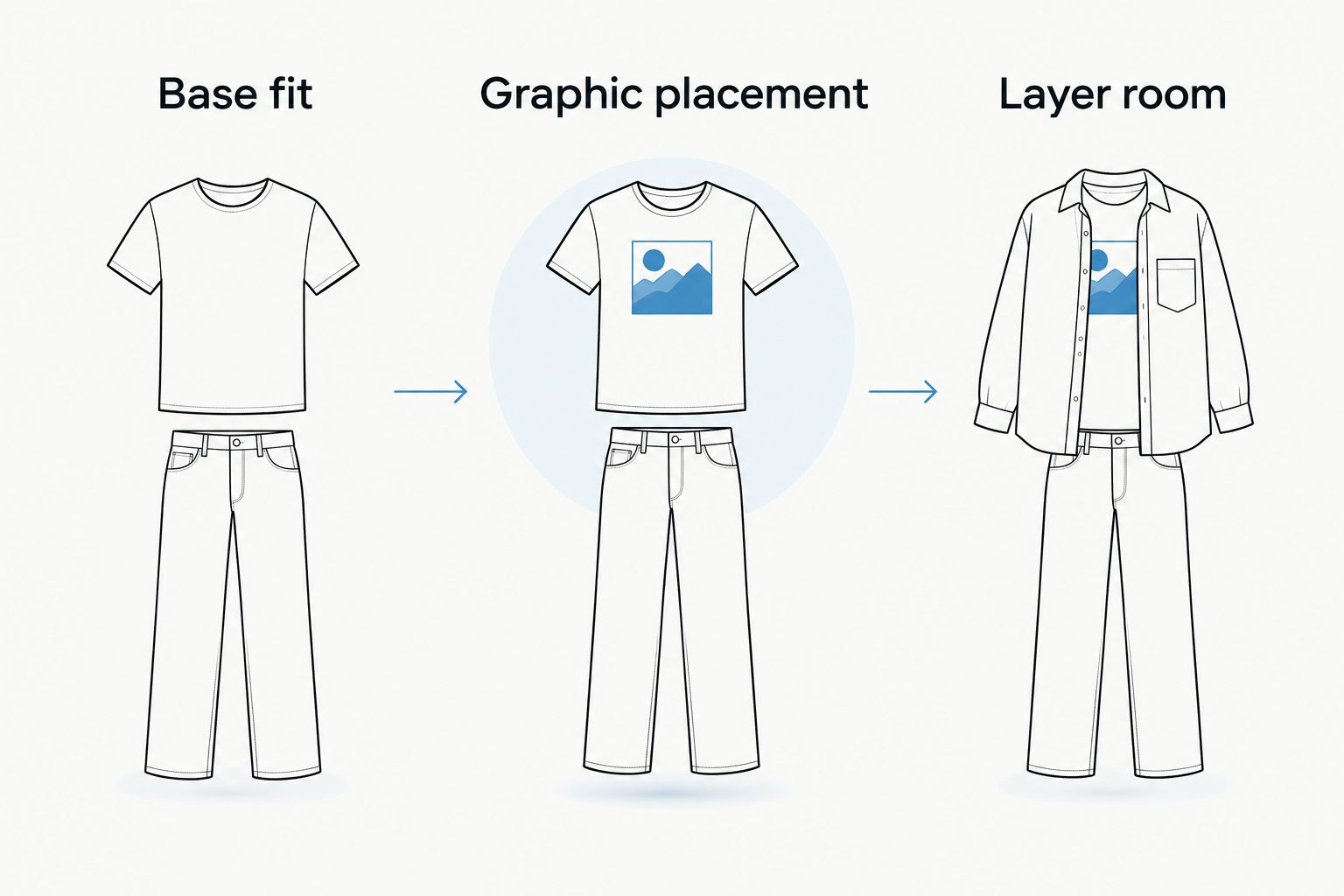
Run a 2-minute movement check with a similar outfit at home. This is a practical rehearsal, not a test your body has to pass; change the clothing choice if the combination doesn't feel right.
- Sit down and notice whether the waistband and hem feel comfortable together.
- Reach forward to check shoulder and sleeve movement.
- Raise your arms to see where the top settles afterward.
- Close your usual outer layer over the proposed silhouette.
- Check whether a bag strap covers the part of the graphic you want visible.
6. Read the listing like a buyer, not a fan
A graphic can earn your attention. The listing still needs to earn your decision. Before choosing, read the specific item's measurements, material information, care instructions, and size options wherever those details are provided.
For a first Hexanoir order, choose the item whose fit you can compare most confidently with something you own. That gives you a clearer starting point than choosing several unfamiliar silhouettes at once.
Save a 2026 fit note for each purchase: the item's name, chosen size, measurements used, and how it feels in your usual outfit. Your own record is more useful than assuming a label behaves identically across different cuts.
- Confirm the size option on the individual product listing.
- Identify whether its chart uses body or garment measurements.
- Read material details rather than guessing stretch from a photograph.
- Check the stated care instructions before deciding it suits your routine.
- Read the current return terms before committing.
- Ask for clarification when a missing measurement controls your decision.
Common mistakes plus-size alternative shoppers make
Treating the brand range as an item range
XS–5X describes the brand's overall range. It doesn't establish the options for a specific crop, sweatshirt, or accessory. Check the item first; build the outfit second.
Buying extra room without checking extra length
Choosing a larger label changes more than width. If you want an oversized look, compare the listed dimensions with your reference garment instead of assuming that moving up a label creates your preferred silhouette.
Expecting black to solve every styling problem
An all-black outfit still has hems, sleeves, graphics, and layers to coordinate. Decide where you want attention to land, then check whether the rest of the outfit supports that choice. Black is an option, not an obligation.
Choosing a whole new wardrobe before one workable outfit
A pile of statement tops isn't automatically a set of outfits. For your 2026 wardrobe, start with a combination you can wear to an actual plan: errands, a casual meetup, or an evening out. Add another silhouette when you know what the first outfit needs.
Dressing for someone else's version of alternative
You don't owe anyone platform boots, a corset, bare skin, or head-to-toe black. Wear a graphic tee with familiar trousers if that feels right. Your comfort and taste set the direction.
FAQ
What's the best way to buy plus size alternative clothing online?
Compare the specific item's measurements with a garment you already enjoy wearing. Check whether the chart describes body measurements or finished garment dimensions, then confirm the individual size options.
Does every Hexanoir item come in XS–5X?
Don't assume every Hexanoir item comes in XS–5X. The brand spans that range, but you need to check the listed sizes and measurements for each individual design.
Should I size up for an oversized gothic tee?
Choose an oversized tee by its measurements and intended shape, not by an automatic size increase. Compare width, length, and sleeve information with a roomy top you already like.
Can plus-size shoppers wear cropped alternative tops?
Yes, cropped alternative tops are an option for anyone who likes the silhouette. Check where the hem meets your chosen bottoms while standing, sitting, and reaching so you can choose the coverage you want.
Is a graphic tee or sweatshirt better for a first alternative outfit?
Choose the shape you already wear comfortably for your first alternative outfit. A graphic tee suits a familiar tee-and-bottoms combination; a sweatshirt suits an outfit where you want that additional layer.
How do I make an alternative outfit without replacing my wardrobe?
Add a statement graphic to bottoms, shoes, and layers you already wear. Keep the graphic visible and use your existing accessories to make the combination feel deliberate.
How can I tell whether a graphic top will stretch?
Read the individual item's material and construction details instead of judging stretch from a photo. If stretch is essential to your fit and the listing doesn't explain it, ask for clarification before choosing.
One last thing
A size label can't tell you where a hem will land. Length deserves the same attention as width, especially when you're choosing between a crop, a standard tee, and a sweatshirt.
Before your next purchase, put your favorite top beside your favorite bottoms and photograph the combination. Keep that picture with your measurements. It's a useful reminder of the proportions you actually like—not the ones somebody says you should wear.